
Your company finally appears in an AI answer. Naturally, you'd like to count that as a win. Then you look closer. The answer recommends your competitor and links to your website for a definition. Well, that's a slightly different result.
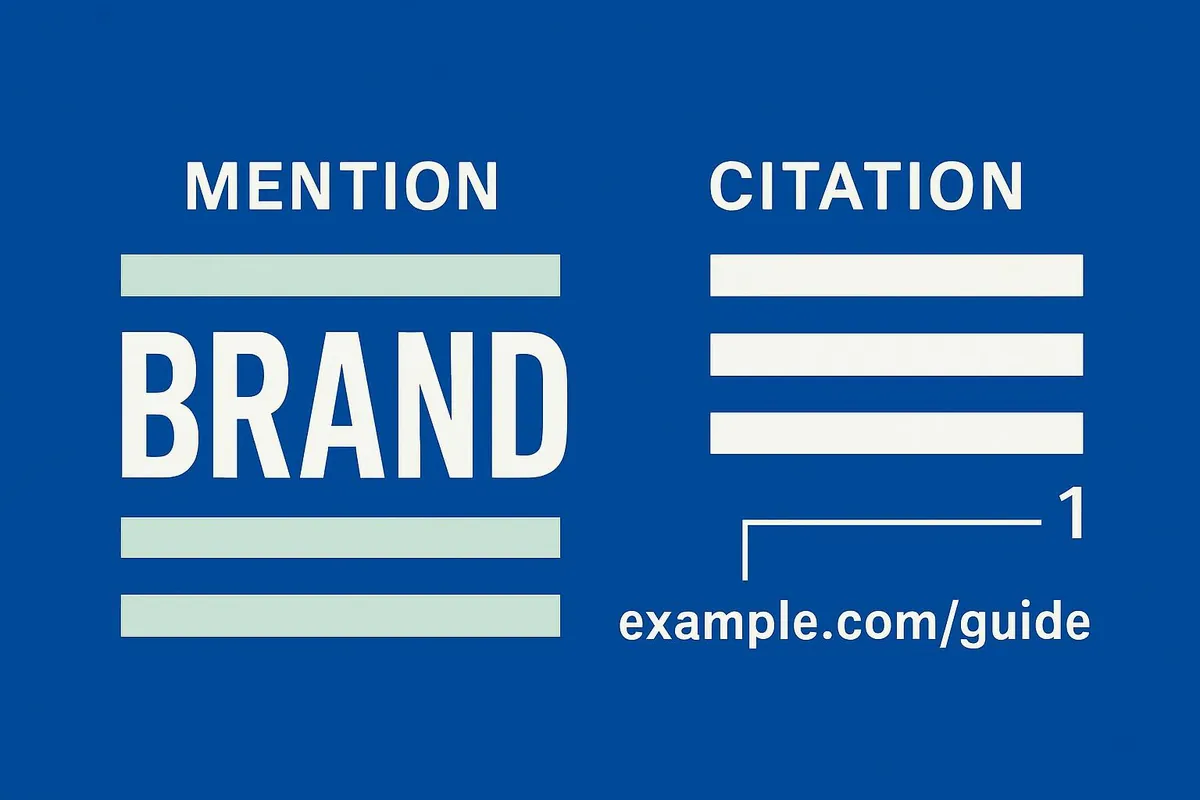
Brand mentions and domain citations can both help your business, but they tell you different things. A favorable mention can put you on someone's shortlist. A citation gives your page a visible source link and a possible route to a visit. Which matters more depends on what you need that answer to do.
| What appears in the answer | What you can observe | What you still need to check |
|---|---|---|
| Your brand name only | The answer mentions your business | Whether the description is accurate and favorable |
| Your website as a source only | A page on your domain is cited | Whether anyone clicks or recognizes your brand |
| Both your name and website | Both forms of visibility occur | Whether the citation supports the brand claim |
| Neither | You are absent from that captured answer | Whether you appear on other relevant questions |
Brand mentions and domain citations measure different things
Try asking an AI assistant which project management tools suit a small design studio. Imagine your company is called StudioTrack.
If the answer says StudioTrack suits teams that need client approvals, that is a brand mention. It might cite an independent review to support the recommendation. The answer mentions your business without linking to your website.
If the answer uses a StudioTrack article to explain approval workflows and cites that article, that is an owned-domain citation. The assistant could use the information without mentioning StudioTrack in the body at all. Here, "owned" means the source URL belongs to a domain you control.
You can also receive both. But read the sentence before celebrating. An answer could say StudioTrack costs too much for the buyer while citing its pricing page. Both counters would go up even though the recommendation could cost you a sale.
A third-party article about your business adds another distinction. A citation to that article is useful coverage to inspect, but it is not a citation to your domain. Keep the publisher's URL and your company name in separate fields when you track it.
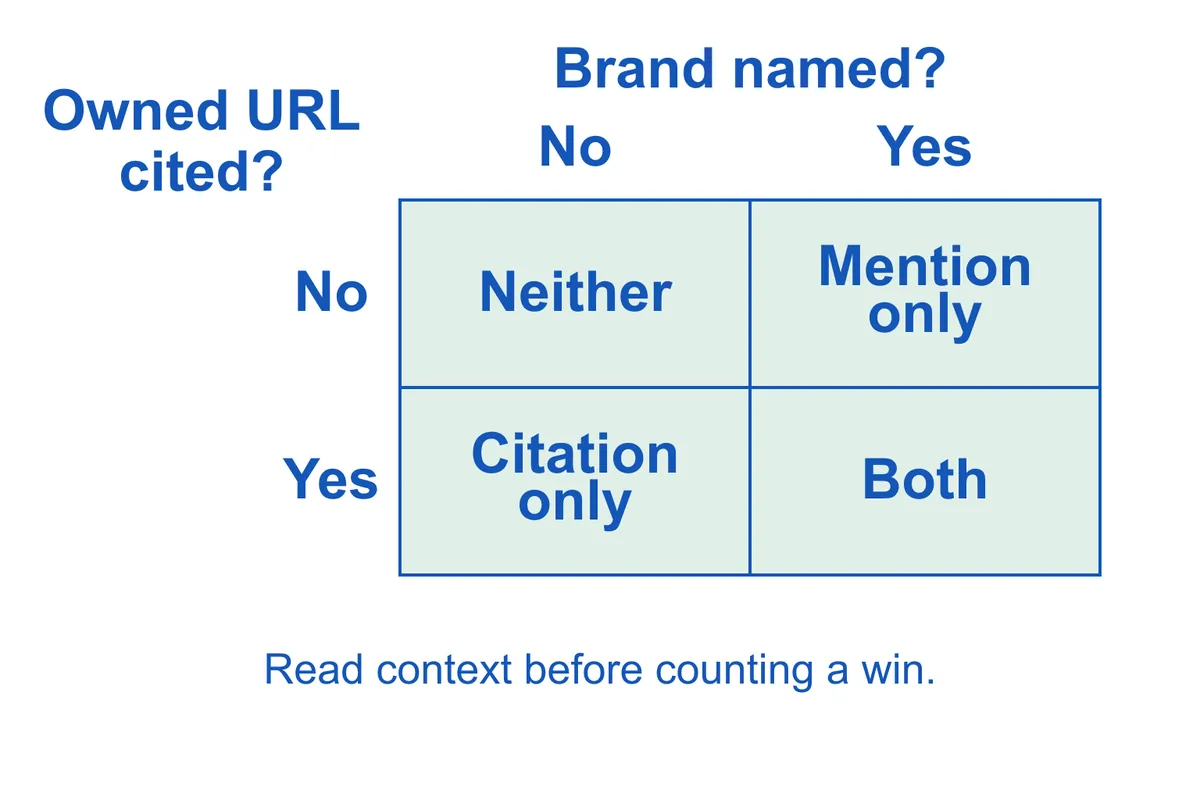
Which is more impactful for your business?
When a buyer asks which company to choose, an accurate, favorable brand mention is usually the more useful signal. Someone asking for suitable software needs options. A recommendation can introduce your company even if the person never opens a source link during that conversation.
For bringing people to a useful resource, an owned-domain citation is closer to your goal. It creates a clickable route to the page. You still need to measure whether people take that route and whether those visits lead anywhere useful.
The two events overlap less than you might expect. In its July 2026 study, BuzzStream looked at 12,000 answers about roughly 200 brands across 4 AI surfaces. Only 23.1% of the tracked brand mentions appeared alongside a citation to that brand's domain in the same response. The figure was 7.2% for category and list questions, compared with 39% for single-brand questions.
Those figures describe that study's sample, not the return on your marketing budget. They also show why testing only questions that already contain your company name can give you a flattering picture of visibility. Buyers who haven't heard of you ask different questions.
A source link alone doesn't establish that an assistant trusts your whole business, and a name alone doesn't establish endorsement. Neither tells you what revenue followed. Treat them as observations you can investigate, with qualified visits, leads and sales measured separately.
8 ways to improve the outcomes that matter
Start with the gap you can see. If an answer gets your service wrong, fix that information before you publish another general guide.
1. Choose questions your buyers would ask
Build a small set from sales calls, customer emails and useful search queries. Include the problem, the buying decision and any limits. A question about "project management software for a design studio with freelance collaborators" tells you more than "best software."
Keep questions about your own brand in a separate group. They help you check accuracy, but they don't show whether an unfamiliar buyer would discover you.
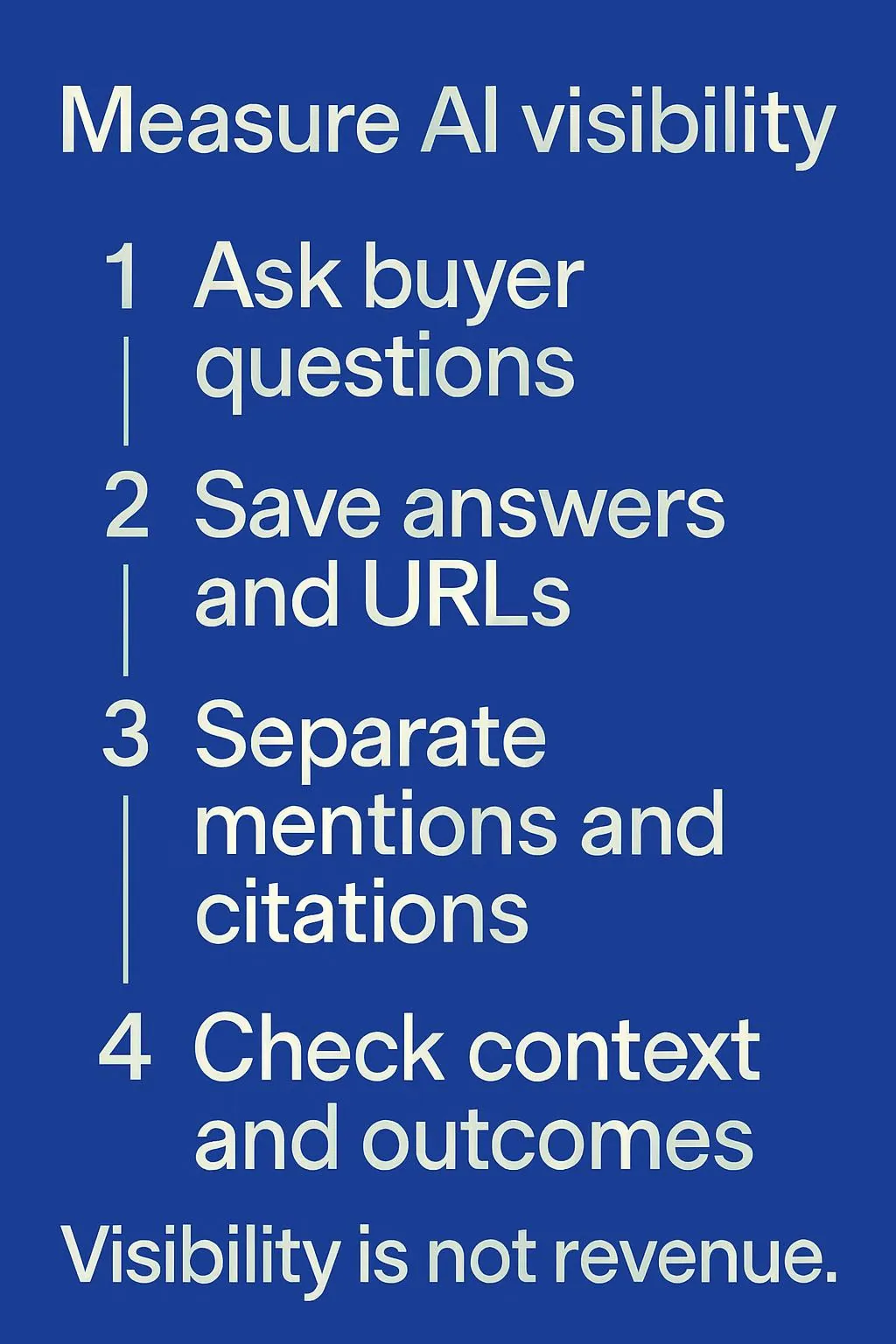
2. Save the full answer and its sources
Record the assistant, date, question, market or language, and whether search was enabled. Save the complete response and the exact source URLs. A screenshot of your name without its surrounding sentence can hide the most useful part.
Repeat the same sample over time. Responses and source links can change, so one answer gives you a finding to check rather than a permanent position.
3. Count mentions and citations separately
For a simple audit, count each valid answer once for each event. If 8 of 40 saved answers mention your company, your sample's mention rate is 20%. If 5 cite an owned URL, its owned-domain citation rate is 12.5%.
Divide both counts by the same number of valid answers. Exclude failed runs and show the sample size. Also record whether the mention is favorable, neutral, critical or factually wrong. Repeating your name 5 times in one answer shouldn't turn that answer into 5 separate wins.
4. Check whether the right pages can be accessed
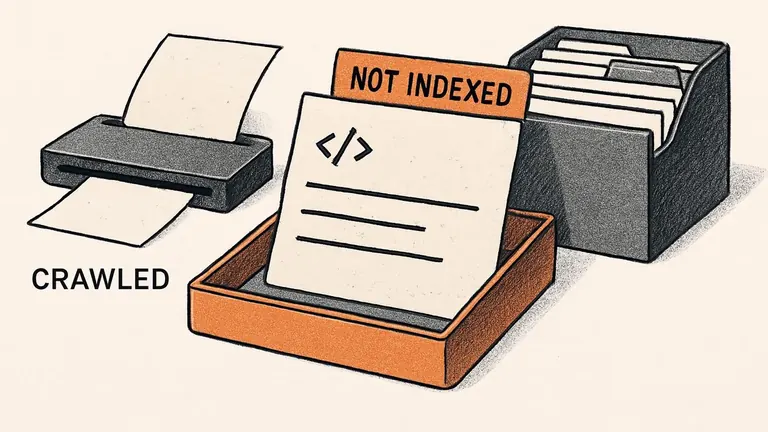
For Google AI features, check that Google has indexed the page and can show a search snippet before you rewrite it. Inspect robots rules, server responses and security settings if access appears blocked. Other assistants set their own rules for search crawlers, so check the documentation for the platform you're investigating.
Fix accidental blocks on pages you intend to publish. A page that meets those rules has a chance to appear, but there is no guarantee it will be chosen.
5. Correct the facts buyers use to compare you
Review pricing, service areas, product names, availability and important limits on your own pages. Then check legitimate business profiles you control for contradictions.
An assistant that describes an old plan may have found an out-of-date page. Update the source and remove conflicting claims where appropriate. Keep a dated record so you can check whether the incorrect description persists in later samples.
6. Improve the page that should answer the question
Pick a few pages tied to relevant questions. Explain who the service suits and how it works. Include what buyers get and any limits they should know about. Use specific examples or original evidence where you have them.
Clear headings and readable text help people find that information. Google requires no special AI schema for its AI search features. Buying an extra markup package won't substitute for an answer your page doesn't contain.
7. Inspect independent pages that shape the answer
Open the reviews, directories and articles cited alongside your company. Check whether their descriptions are accurate and whether the publication serves your audience.
Where information is wrong, a factual correction may help. If a relevant outlet hasn't covered your company, it may be worth contacting its editors. Avoid mass-producing mentions or treating every cited publisher as a place to buy inclusion.
8. Connect visibility with business results
Compare your answer samples over time with AI visits you can identify, what visitors do on the page and leads that fit your business. Where appropriate, ask new customers how they first heard about you. Their answers can reveal discovery that website analytics never observed.
Report those findings separately. A rise in mentions alongside more leads is encouraging, but it doesn't prove the mentions caused those leads. Use the combined picture to choose the next fix, then record what changed.
Where Growing Search fits
Growing Search brings technical SEO, content marketing and AI visibility work into the same plan. That combination is relevant when a brand needs both accessible source pages and a more accurate presence in AI recommendations. Start with the problem you need to fix. Your pages might leave buyer questions unanswered, describe your service incorrectly or block search crawlers. Visitors might also leave without contacting you or buying. An agency can address those problems and measure progress, while recognizing that no provider controls which brands an AI answer will mention or cite.