

Google has been breaking things since December 2025, and nobody got a break. The December core update finished rolling out on December 29, and before anyone could pull together a coherent analysis of what happened, January brought wave after wave of ranking volatility.
Then, on February 5, 2026, Google did something it had never done before. It announced a core update targeting Discover and Discover alone. Not search. Not images. Not news in the traditional sense. The Discover feed, specifically, got its own algorithm overhaul, and the fallout has been severe for publishers who built their traffic strategies around it.
Some lost 90% or more of their Discover visibility overnight. Others, after months of being invisible in the feed, suddenly started showing up again. The February 2026 Discover Core Update is worth studying carefully because it tells you exactly where Google is heading, and it punishes everything Google has been warning about for years.
Table of Contents
What Google Actually Announced

On February 5, 2026, Google published an announcement on the Search Central Blog describing this as “a broad update to our systems that surface articles in Discover.” The rollout began at 09:00 US/Pacific that same day, according to Google’s Status Dashboard. Google said the rollout could take up to 2 weeks to complete, putting the potential end date around February 19.
Barry Schwartz of Search Engine Roundtable pointed out the unusual nature of the announcement, writing that he was “honestly not sure if Google ever announced a Discover specific update.” He noted that while normal core updates affect Google Discover, this specific announcement was about a core update impacting only Google Discover.
The update was limited to English language users in the US at launch. Google said it would expand to all countries and languages in the months ahead but gave no specific timeline for that international rollout.
What the Update Was Designed to Do
Google was more specific than usual about the goals of this update. According to the Search Central Blog announcement, the update aims to:
-
- Show users more locally relevant content from websites based in their country
-
- Reduce sensational content and clickbait in Discover
-
- Show more in-depth, original, and timely content from websites with demonstrated topic-level expertise
That last point is worth spending time on. Google stated that because many sites demonstrate deep knowledge across a wide range of subjects, their systems are designed to identify expertise on a topic-by-topic basis. John Mueller gave a concrete example in the announcement: a local news site with a dedicated gardening section could have established expertise in gardening, even if it covers many other topics. A movie review site that published 1 gardening article would likely not qualify.
This means Google is not giving a site a single expertise score. It is evaluating each topic cluster separately.
Updated Discover Documentation
Google revised its Discover documentation at the same time. Glenn Gabe of GSQi flagged the changes, which were cited by Search Engine Roundtable. The new documentation instructs publishers to:
-
- Avoid clickbait and similar tactics that artificially inflate engagement through misleading or exaggerated titles, snippets, or images
-
- Avoid withholding information required to understand what the content is about
-
- Use page titles and headlines that capture the essence of the content
-
- Avoid sensationalism tactics that manipulate appeal by catering to morbid curiosity, titillation, or outrage
-
- Provide content that is timely for current interests, tells a story well, or provides unique insights
-
- Include compelling, high-quality images, at least 1200px wide, with the max-image-preview:large setting enabled
-
- Provide a great page performance
That last bullet about page performance was new to the Discover documentation.
The Authors Section and E-E-A-T
On February 1, 2026, 4 days before the Discover update announcement, Google added a new Authors section to Search Central documentation. Google said this was not directly tied to the algorithm update, but the timing sent a strong message.
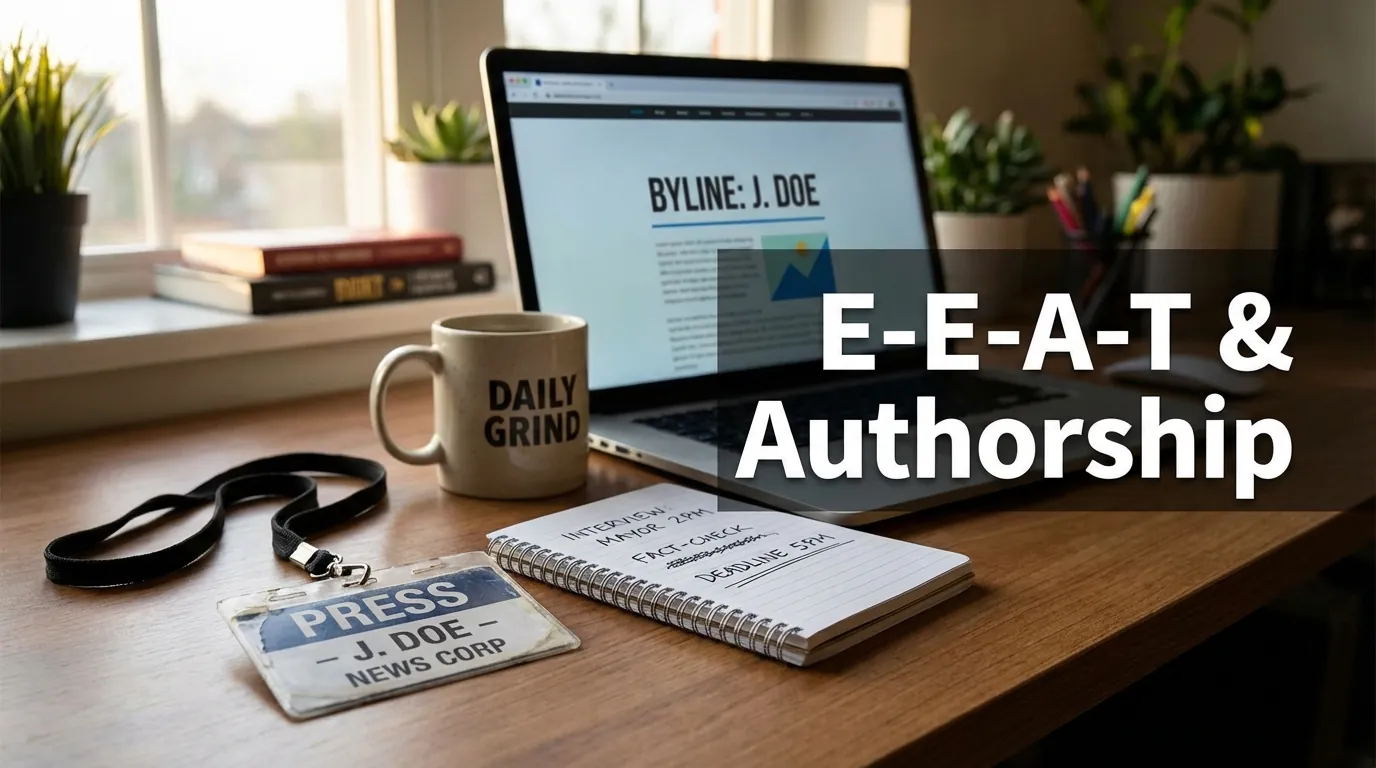
The Search Central documentation now asks publishers to consider if visitors can tell who authored the content, if pages carry a byline where one might be expected, and if those bylines lead to further information about the author. Google’s language is firm here: they “strongly encourage adding accurate authorship information, such as bylines to content where readers might expect it.”
E-E-A-T (Experience, Expertise, Authoritativeness, Trustworthiness) has been a framework for years. This update made it operational for Discover specifically. Sites that identify their authors, display relevant credentials, and demonstrate real-world expertise consistently outperformed those that do not.
The Volatility Problem
To understand February 2026, you have to look at what came before it. The December 2025 Core Update began rolling out on December 11 and finished on December 29, taking 18 days. That update hit hard. Data indicates it hurt the rankings of 40-60% of sites, with affiliate sites taking the worst of it at 71%.
After December’s rollout ended, the SERPs never settled. Search Engine Roundtable documented at least 9 separate waves of volatility in 7 weeks. December bled into January, and January bled into February. There was no rest period between them.
Tracking tools including Semrush Sensor, Sistrix, Algoroo, Accuranker, and Mozcast all reported extreme fluctuation during this period. The spikes were not limited to isolated niches; they appeared across the board and at levels comparable to the September 2024 helpful content recovery update.
What the Ranking Data Shows
A study by SE Ranking analyzing 100,000 keywords produced some of the most concrete numbers from this period. Roughly 15% of all pages previously ranking in the top 10 vanished completely from the top 100. In e-commerce, 23% of the top 3 URLs were swapped out. In the health sector, that figure was 8%.
Those numbers give you a sense of the scale. 1 in 7 pages that had been in the top 10 simply disappeared from the first 10 pages of results.
What the Discover Data Shows
NewzDash, a Discover-specific tracking platform, published one of the most detailed analyses of the update’s effects using panel data from millions of US users tracked through its DiscoverPulse tool. It compared a pre-update window (January 25-31) against a post-update window (February 8-14) across the top 1,000 domains and top 1,000 articles in the US overall, California, and New York.
Geographic Personalization Is Real
The 3 feeds (US, California, New York) mostly overlapped but each state received local stories the others did not. New York-local domains appeared roughly 5 times more often in the New York feed than in the California feed, and vice versa. The feeds still shared most of their Top 100 items. This is not 3 completely separate feeds but rather a common national core with a meaningful regional layer on top.
Publisher Concentration Narrowed
This finding is particularly important for smaller publishers. Unique content categories grew across all 3 geographic views, meaning Discover was covering more topics. But unique publishers shrank: in the US, from 172 to 158 domains, and in California, from 187 to 177. Discover is covering more ground but sending that distribution to fewer publishers.
Specific Examples of Suppression
Yahoo’s presence in the US Top 1,000 shrank from 11 to 6 articles. More telling: Yahoo went from having multiple items in the Top 100 pre-update to 0 items in the Top 100 post-update.
Autoevolution had 5 articles in the pre-update US Top 1,000, all following a near-identical “dramatic reveal” formula. Post-update, Autoevolution had 0 articles in the US Top 1,000. NewzDash flagged this as one of the cleanest examples of Discover identifying and suppressing repetitive sensational templates.
X.com Content Gained Ground
X.com posts from institutional accounts climbed from 3 to 13 items in the US top 100 Discover placements and from 2 to 14 in New York’s top 100. NewzDash reported it had tracked X.com’s Discover growth since November and said the update appeared to accelerate the trend. Most top-performing X items came from established media brands.
Headline Patterns Changed
NewzDash found that titles became longer and editorial volume rose modestly. The data showed demotion of specific templated patterns, particularly when those patterns came from sites that rely heavily on them. The feed is becoming less dependent on short, curiosity-gap framing.
What Got Punished
Multiple credible sources agree on the types of content that lost ground in this update.
Mass-Produced AI Content
Sites publishing high volumes of AI-generated content with minimal human oversight saw some of the steepest declines. Glenn Gabe coined the term “Mt. AI” for this pattern: a site mass-publishes AI-generated content, sees a steep surge in visibility, then crashes equally hard. The traffic curve looks like a mountain peak. Data from the December 2025 update showed mass-produced AI content without expert oversight had 87% negative impact, thin affiliate content lacking original testing saw 71% drops, and generic keyword-optimized content showed 63% losses. These patterns intensified in February.
The distinction that matters: AI-assisted content was not penalized by default. Google is getting better at separating content where AI supports human expertise from content that is clearly manufactured at scale with no editorial judgment behind it. It is worth noting that AI content detection tools themselves are unreliable — the real question is whether the content adds genuine value, not whether a detector flags it.
Clickbait and Sensational Headlines
Sites that relied on sensational headlines saw traffic drops of 30-60%. The Autoevolution example above is a concrete case. Google’s updated documentation makes this explicit: withholding information required to understand what the content is about, and using misleading or exaggerated details to increase appeal, are now specifically named as practices to avoid.
YMYL Content Without Credentials
Your Money or Your Life content in health, finance, and legal verticals faced the steepest drops. Google now requires demonstrable expertise for this content to appear in Discover feeds at all. Author credentials, cited sources, and editorial review processes are functional requirements, not suggestions.
Parasite SEO
Third-party content hosted on high-authority domains to exploit that domain’s ranking power continued to lose ground. Google has been targeting this practice since late 2024, and February extended those efforts.
Poor Page Performance
Slow-loading pages, intrusive interstitials, and layouts with measurable Cumulative Layout Shift issues correlated with ranking losses.
What Worked

Topic-Specific Depth
Sites covering fewer topics with greater depth outperformed generalist publishers that spread thin across dozens of unrelated categories. Interlinked topic clusters that comprehensively cover a subject and its subtopics send stronger authority signals to Google’s systems than isolated pages.
Original Reporting and Unique Data
Google’s algorithm now calculates the value of a page using a concept called Information Gain. If your article says the exact same thing as the top 5 results, rephrased by an AI, your Information Gain score is effectively 0. Google does not need a 6th version of the same answer. Proprietary data, original research, expert commentary, and unique analysis that competitors cannot easily replicate are the strongest content quality signals right now.
Visual Quality
Posts with 1200px or larger images and the max-image-preview:large meta tag see 45% higher click-through rates in Discover compared to those with smaller or missing images. Some sites reported partial Discover recovery within 7-10 days after upgrading images alone. This is the fastest technical fix available.
Transparent Authorship
Every post showing strong Discover performance has a real human bio with links to professional profiles and past credentials. News sites with original reporting saw faster recoveries. Evergreen blogs that updated content thoughtfully held ground.
Consistent Publishing Within Core Topics
Each quality article published within a site’s core topic areas reinforces the site’s topical authority signal for Discover. 5 excellent articles in a defined niche are worth more than 20 thin posts across unrelated topics.
What SEO Experts Have Observed
The community response was immediate. As Schwartz wrote, “the amount of comments on this site about visibility changes in Google Discover over the past couple of days is insane.”
Publisher comments documented on Search Engine Roundtable give a ground-level view:
-
- “I remain at 90-95% down, wiped from search, images, news, and discover.”
-
- “I’ve been doing this for a long time, but it was all wiped overnight, and yes, my site was in News, just like Discover and removed.”
-
- “From Feb 2nd I lost almost all traffic from Discover. it’s just terrible.”
Some publishers saw positive results, with content reappearing in Discover after long absences. The update redistributed traffic toward publishers that align with the new quality and relevance criteria while reducing visibility for those relying on clickbait or serving audiences outside their geographic base.
Press Gazette reported sobering context: global publisher traffic from Google has already declined, with Discover referrals down 18% and search referrals down 21% since May 2023. The February update adds pressure on publishers already dealing with shrinking Google traffic.
For many publishers, Discover traffic accounts for 30-70% of total sessions during peak times. With over 800 million monthly active users, the stakes of this update are high.
How to Recover
Wait Before Reacting
Google’s documentation recommends waiting at least 14 days after rollout completion before making major decisions. Discover traffic is inherently volatile, and Google explicitly warns against drawing conclusions from brief dips or spikes. Compare rolling 7-day averages rather than daily snapshots.
Do not rush into rewriting every article or redesigning your entire site the moment you see a traffic drop. That is usually the worst move.
Audit Content, Not Technical SEO
Most sites that make meaningful content quality improvements see partial Discover recovery within 2 weeks and full recovery within 4 weeks. Other sources extend the timeline to 2-6 weeks with sustained quality improvements.
Critically, some sites saw partial rebounds weeks later after publishing higher-quality follow-ups. Discover reevaluates sites continuously, not during update windows alone.
Specific Steps for Content
-
- Audit your top Discover pages and remove or rewrite clickbait headlines
-
- Add local context where relevant
-
- Strengthen author credibility with bios, credentials, and social proof
-
- Update old trending posts with fresh insights
-
- Add original research, proprietary data, or expert commentary that competitors cannot replicate
-
- Review the new Authors section in Search Central for specific guidance
What Not to Do
-
- No major technical overhauls during peak volatility, including URL restructures, CMS migrations, or massive redesigns
-
- No panicked content purges or mass noindexing without hard data to support the decision
-
- Do not append “2026” to existing article titles to fake recency signals; that is exactly the type of tactic Google is targeting
Structured Data and AI Overviews
Google is synthesizing answers for AI Overviews, and content that can be confidently summarized and cited gets priority. Use JSON-LD Schema (Article and FAQ) to make content parseable for AI systems. If the AI cannot parse your data quickly, it will cite a competitor. The connection between E-E-A-T signals and visibility in AI-powered search features is becoming more direct.
Monitor Correctly
Use Search Console performance reports to distinguish Discover traffic trends from search traffic changes. Do not judge impact based on 24-48 hour fluctuations. One of the most common mistakes during a core update rollout is reacting too quickly to short-term data. Patience and structured analysis produce better decisions than panic.
Where This Leaves Publishers
The February 2026 Discover Core Update is not an isolated event. It is the latest step in a direction Google has been heading since 2022. Every core update has moved further toward rewarding genuine expertise, original content, and strong user-facing performance. The sites that consistently perform well through these updates share common traits: they are run by people who know their subject matter, they create content that serves their audience rather than search engines, and they invest in the technical foundations that make their content accessible and fast.
The “Local First” framework built into this update is not a temporary adjustment. Google has repositioned Discover as a localized, expertise-driven platform. Publishing 100 average articles no longer works. 1 detailed, helpful, expert-level article performs better.
The practical advice from volatility analysis experts applies here as much as anywhere: use the current turmoil to take an honest inventory of your site. Audit your content for genuine substance, reinforce your expertise with proprietary data and firsthand knowledge, and document everything in Google Search Console. The SERPs will continue to fluctuate. Your substance should not.
Discover traffic should be treated as a bonus channel rather than a primary dependency. It remains inherently volatile compared to traditional search, with user interests, algorithm changes, and seasonal patterns all affecting visibility. Publishers who build their entire business model around Discover traffic are building on unstable ground. Those who treat it as a reward for doing good work in their area of expertise will fare better through this update and the ones that follow it.